
FROM BIOMASS
TO BIOMETHANE.
The real process journey through the Jansath facility — each stage explained twice: once technically, once in plain language.
- 01
Feedstock
- 02
Digestion
- 03
Raw Biogas
- 04
VPSA Purification
- 05
Biomethane
- 06
Compression
- 07
CBG to IGL
TEN STAGES,
ONE FACILITY.
Photographs marked as facility imagery were taken at Dhansri, Jansath. Anything contextual is labelled as such.
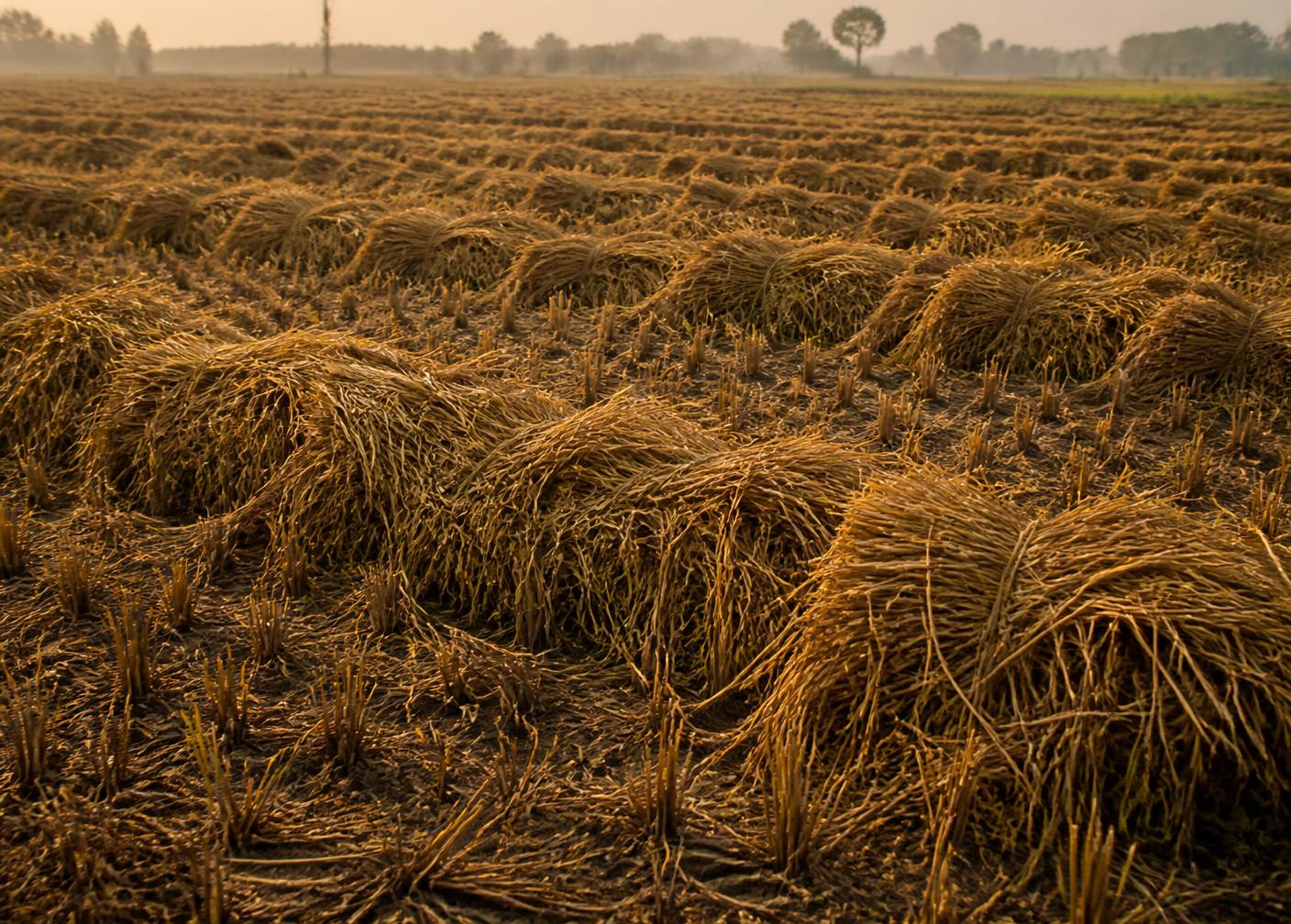
FEEDSTOCK ARRIVES
Paddy straw, pressmud and cattle dung are received, weighed and assessed at the facility.
In plain terms: the raw material is farm leftovers. Straw from the paddy harvest, pressmud from sugar processing, and dung from the surrounding villages.
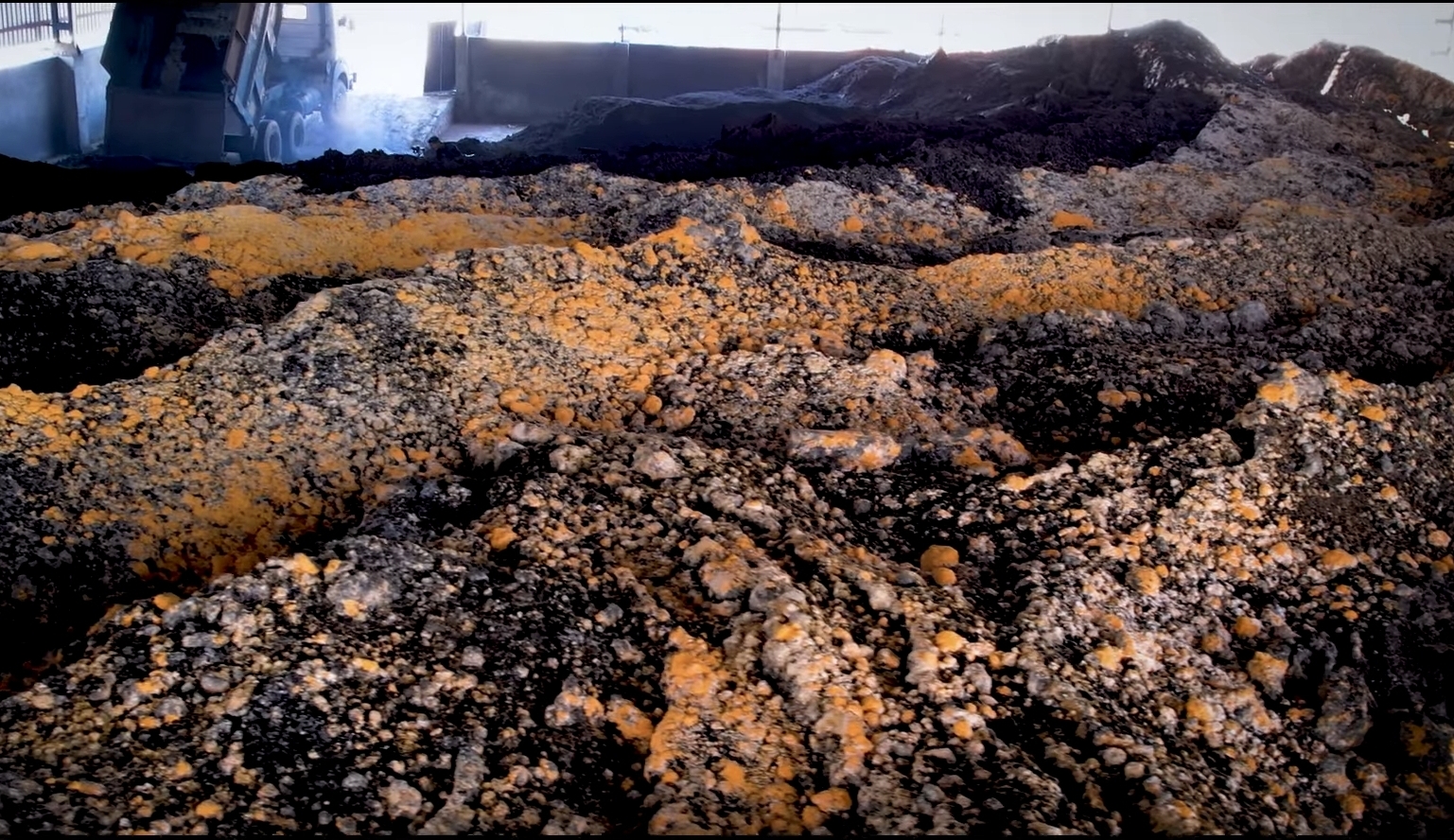
PRESSMUD STORAGE
Pressmud (mali) is stockpiled under cover so moisture and consistency stay within the range the digesters need.
In plain terms: feedstock is kept dry and uniform, because a steady diet keeps the biology stable.
PREPARATION & FEEDING
Blended feedstock is conveyed into the digester structure at a controlled rate.
In plain terms: material is mixed to a recipe and fed in continuously rather than all at once.
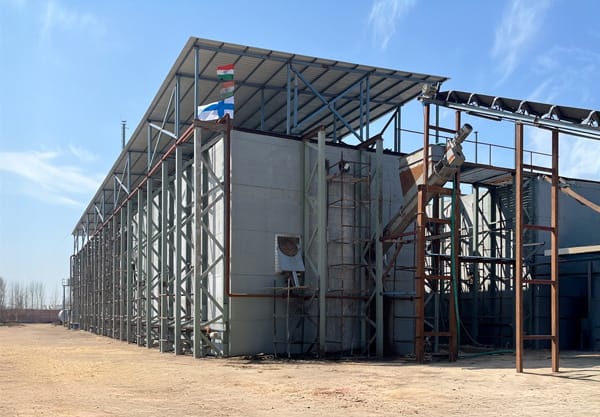
PLUG-FLOW DRY DIGESTION
Inside sealed concrete digesters, bacteria break the biomass down in an oxygen-free environment. Material moves through as a slow-advancing plug rather than being stirred as a slurry.
In plain terms: it is controlled decomposition. No air, steady warmth, and the biomass travels from one end of the tank to the other as it breaks down.
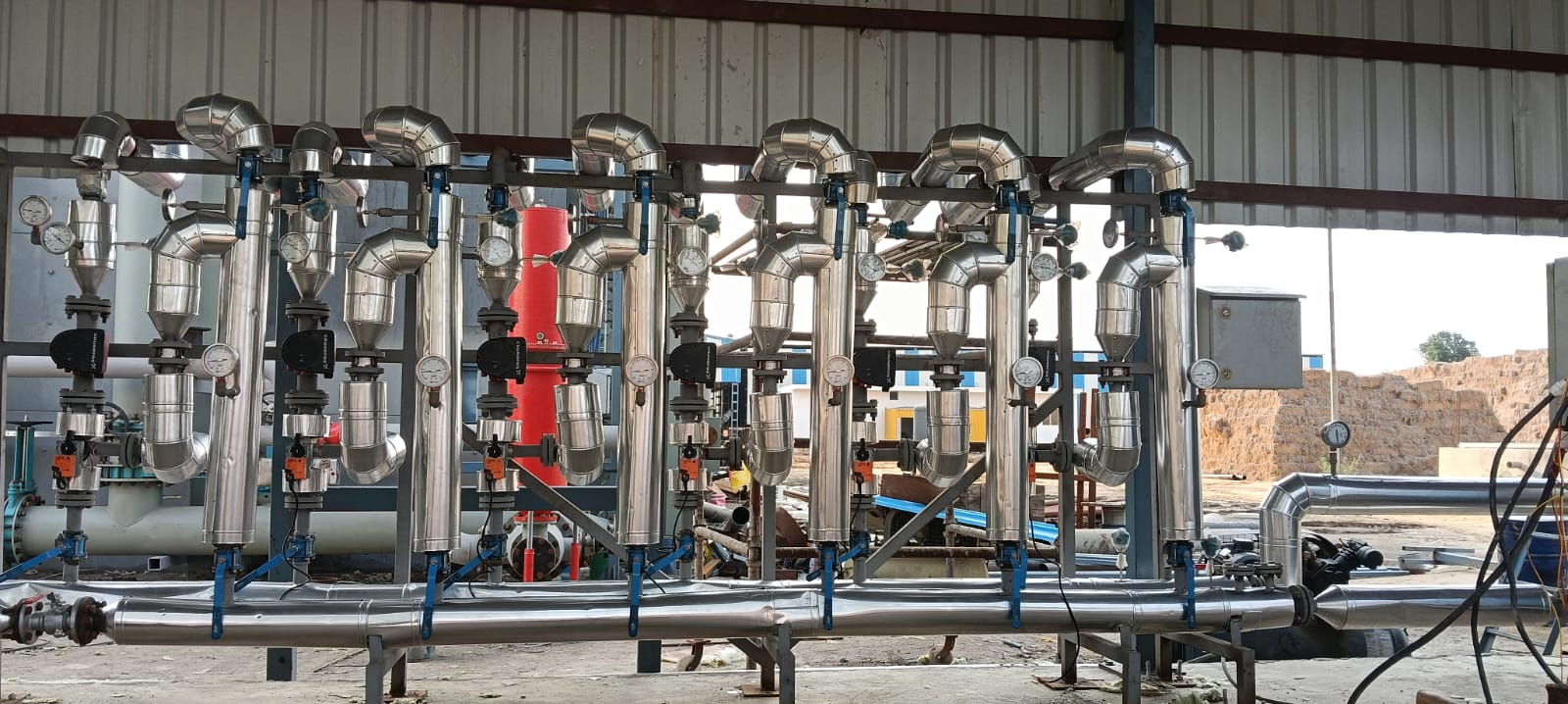
PROCESS HEATING
Insulated heating circuits hold the digesters at their working temperature through the season.
In plain terms: the bacteria work best when kept warm, so heat is circulated around the tanks — especially through north Indian winters.
Stage 05 · photography to follow
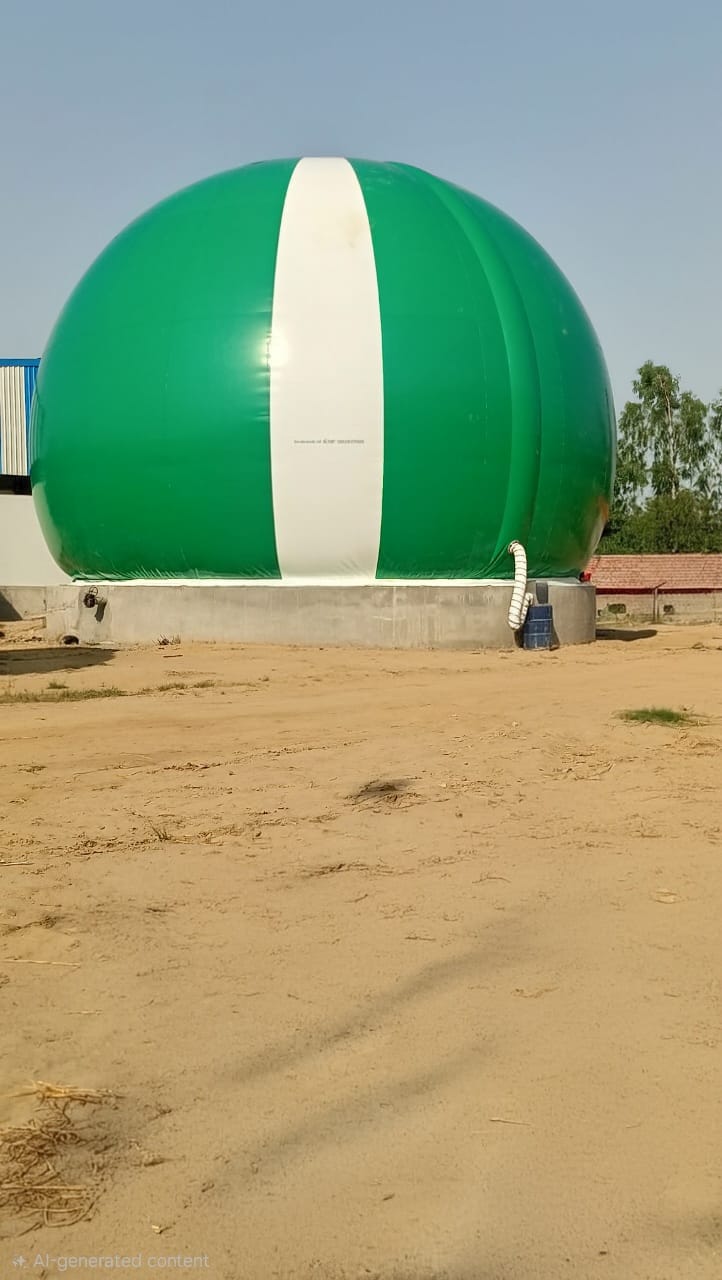
RAW BIOGAS STORAGE
Raw biogas collects in a ground-mounted storage balloon, buffering the flow between digestion and purification.
In plain terms: gas production and gas cleaning never run at exactly the same rate, so the balloon absorbs the difference.
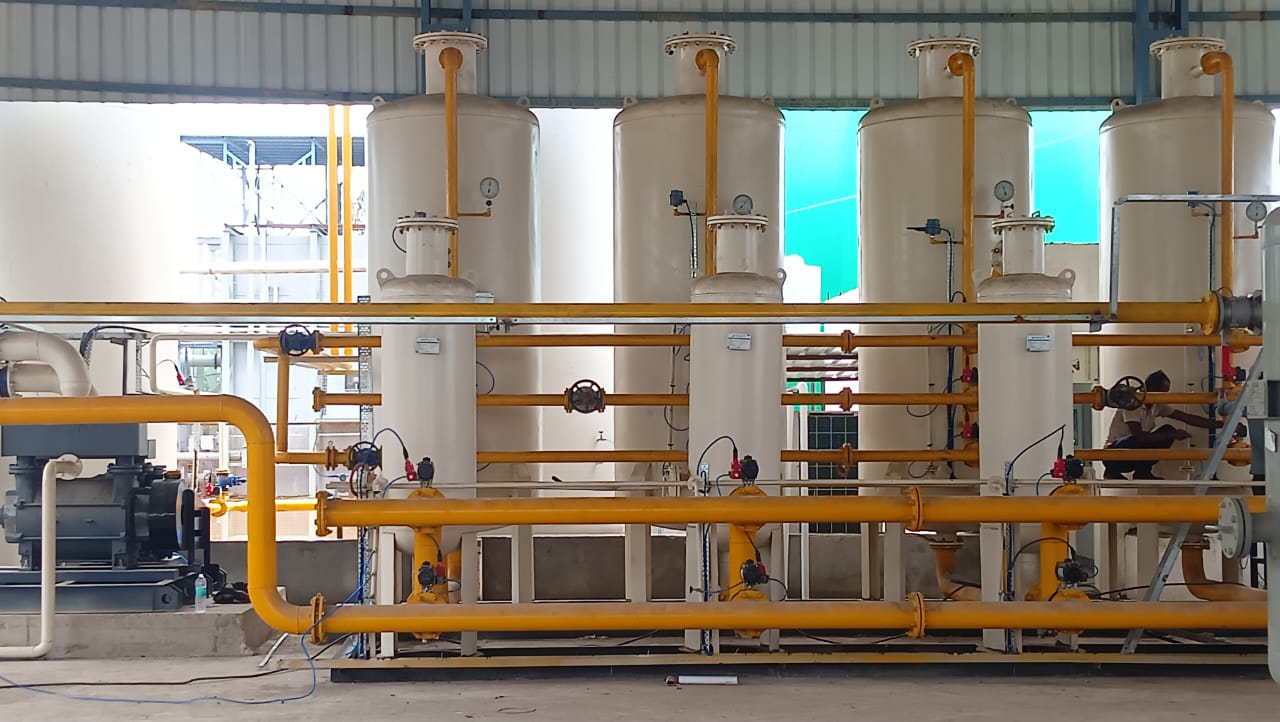
VPSA PURIFICATION
Vacuum Pressure Swing Adsorption separates carbon dioxide and trace components from methane, upgrading raw biogas to biomethane.
In plain terms: raw biogas is roughly half methane and half carbon dioxide. The VPSA unit uses adsorbent beds under alternating pressure to strip the carbon dioxide out.
COMPRESSION TO CBG
Upgraded biomethane is compressed and filled into cylinder cascades as Compressed Bio-Gas.
In plain terms: the cleaned gas is squeezed into high-pressure cylinders so it can be moved and used as a vehicle and industrial fuel.
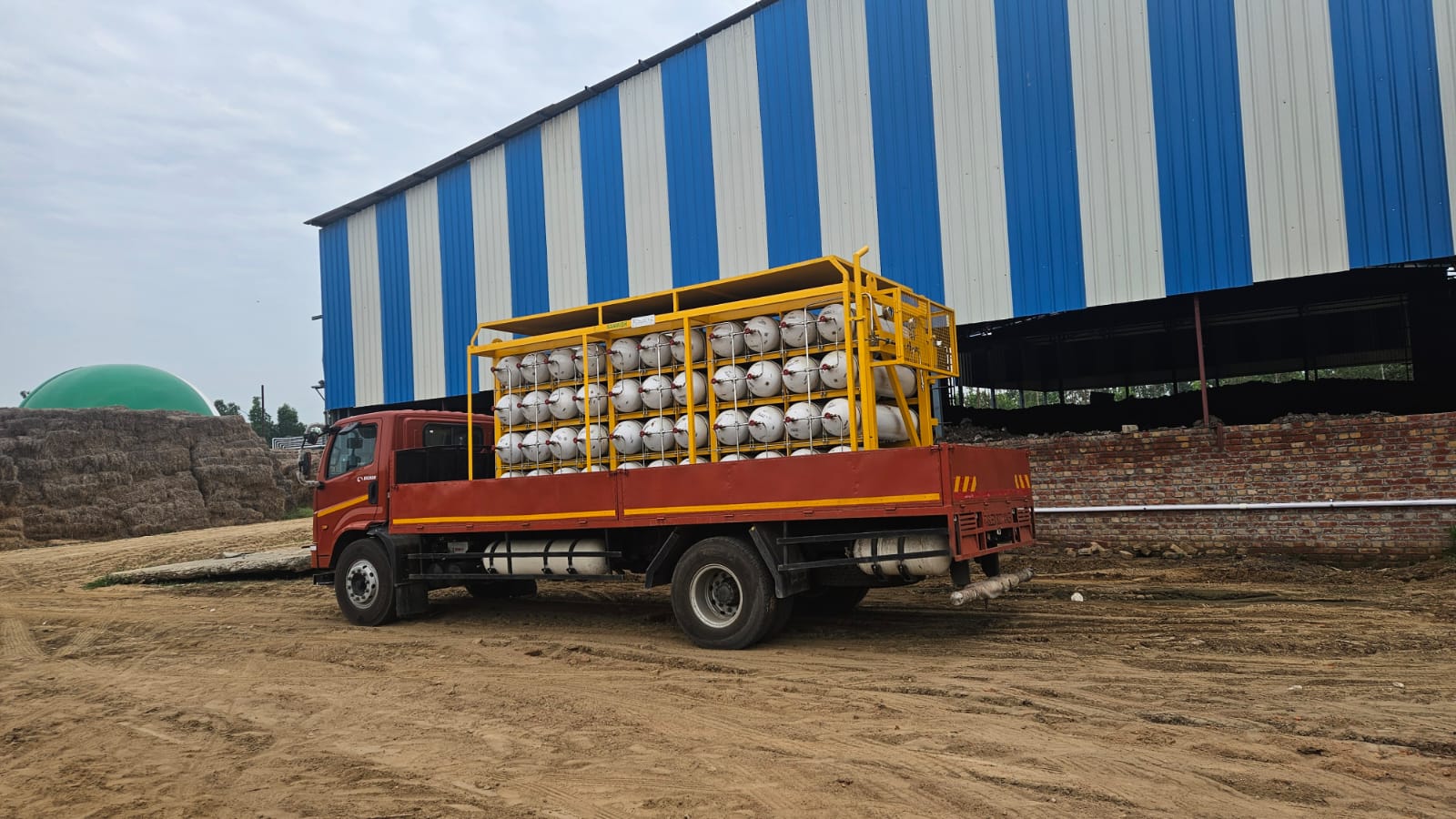
DISPATCH TO IGL
Cascades are transported by road to Indraprastha Gas Limited (IGL) off-take points, supported by TPA arrangements with GAIL and IGL. The facility is preparing for direct integration with IGL's steel pipeline network.
In plain terms: today the gas travels by truck. Work is under way to prepare for gas flowing straight into IGL's steel pipeline network.
Stage 09 · photography to follow
DIGESTATE TO FOM
Material remaining after digestion is recovered as the basis for Fermented Organic Manure and made available for agricultural use.
In plain terms: what the bacteria leave behind still holds the nutrients the crop took from the soil, so it goes back to the fields.
Stage 10 · photography to follow
ENGINEERED FOR
RESOURCE EFFICIENCY.
The Jansath facility uses plug-flow dry anaerobic digestion, insulated process heating and VPSA-based gas purification.
Plug-Flow Dry Digestion
Paddy Straw Utilisation
Pressmud & Dung Processing
Insulated Process Heating
Raw Biogas Storage
VPSA Purification
CBG Cascade Filling
Digestate Recovery to FOM
BUILDING THE NEXT
CHAPTER OF CLEAN ENERGY.
For business enquiries, institutional engagement and industry collaboration, connect with Radha Raman Green Energy Private Limited.